Skip to content
Indore, Madhya Pradesh, 452001

Business hours

Dr. Sushmita Mukherjee

Monday
12pm-5pm
Tuesday
12pm-5pm
Wednesday
12pm-5pm
Thursday
12pm-5pm
Friday
12pm-5pm
Saturday
12pm-5pm
Sunday
Not provided

You can anytime during the day with your query.

9826013944

Latest Posts & Updates

Fresh stories, announcements and offers about Obstetrician-Gynecologist, Fertility Doctor, Reproductive health clinic, straight from our business.

Women's health issues are very common in our society. Many women suffer from menstrual issues.

They may have irregular periods, heavy periods, painful periods or cramps. Some of these issues can be very dangerous. Heavy periods can cause damage to the uterus and ovaries. This can lead to life threatening conditions. In order to prevent this from happening, it is important to seek medical advice if you are experiencing these types of symptoms. Consult Dr. Sushmita Mukherjee for more info.


Women's health issues are very common in our society. Many women suffer from menstrual issues. post imageRead full post

When someone experiences unexplained infertility, they’re unable to conceive after 12 months of t…

When someone experiences unexplained infertility, they’re unable to conceive after 12 months of trying. However, it’s important to remember that a variety of factors influence whether someone becomes pregnant. For example, women who are younger than 35, are more likely to conceive than women who are older. Unexplained infertility is also more likely to happen to women who are obese. Obesity increases the likelihood of infertility due to increased estrogen levels and reduced sperm count and motility. In addition to these conditions, medications, radiation exposure, and certain medical treatments, such as surgery and chemotherapy, can also affect fertility. Consult Dr. Sushmita Mukherjee for more info.

When someone experiences unexplained infertility, they’re unable to conceive after 12 months of t… post imageRead full post

There are three different ways to determine your high-risk pregnancy status:

1. Early Screening Tests: These tests can help identify risks in the first trimester (before you even realize you’re pregnant) and include: Amniocentesis: This test can be used to evaluate the fetal development. It involves extracting a sample of amniotic fluid from your belly, usually through the cervix. Chorionic Villus Sampling (CVS): This test looks at the developing placenta and fetuses. It is more commonly done at 12 weeks gestation. Nuchal Translucency Scan: This scan checks the thickness of your baby’s neck and whether any extra fluid accumulates around it. 2. Obstetric Ultrasound Scanning: This scanning is done as soon as you learn you’re pregnant to look for structural abnormalities and assess fetal growth and development. 3. Blood Work: Blood work may show you are at risk for gestational diabetes or preeclampsia, both of which can lead to health complications for mom and baby. Consult Dr. Sushmita Mukherjee for more info.

There are three different ways to determine your high-risk pregnancy status: post imageRead full post

PCOS is a hormone imbalance that causes an excessive amount of male hormones to build up in the b…

PCOS is a hormone imbalance that causes an excessive amount of male hormones to build up in the body. This makes it harder for you to burn fat. It also causes higher levels of insulin, which means your body becomes used to storing energy as fat. It’s important to understand that your diet and lifestyle habits play a major role in whether or not you can shed the pounds. You’re more likely to succeed if you keep a food journal and cut down on carbs, sugar, and processed foods. In addition, it’s essential to keep track of your activity level. If you exercise regularly, it can help you burn more calories, reduce hunger, and boost metabolism. When it comes to PCOS, it’s important to maintain a healthy lifestyle. Exercise, proper nutrition, stress management, and sleep are all integral to a healthy lifestyle. Consult Dr. Sushmita Mukherjee for more info.

PCOS is a hormone imbalance that causes an excessive amount of male hormones to build up in the b… post imageRead full post

If you are having trouble getting pregnant, chances are your body is not producing the amount of…

If you are having trouble getting pregnant, chances are your body is not producing the amount of eggs needed for fertilization. This is called “poor ovarian reserve” (POR). Many women experience poor ovarian reserve after 40 years of age and can become infertile. Infertility treatments such as ovum donation, in vitro fertilization (IVF), where the eggs are removed and fertilized in the laboratory, can help women with POR. Consult Dr. Sushmita Mukherjee for more info.

If you are having trouble getting pregnant, chances are your body is not producing the amount of… post imageRead full post

The first trimester is the most vulnerable period in pregnancy. The heart and brain are forming.…

The first trimester is the most vulnerable period in pregnancy. The heart and brain are forming. It’s a time where any damage to your body can cause complications and affect the baby. There are certain conditions that are more common during the first trimester of pregnancy. You might hear “morning sickness” or “pre-term labor” but these conditions are more common than what you might think. You can take care of your pregnancy by eating healthy, sleeping well and resting. Avoid caffeine. Don’t smoke and stay away from alcohol. And if you feel sick, see a doctor. Consult Dr. Sushmita Mukherjee for more info.

The first trimester is the most vulnerable period in pregnancy. The heart and brain are forming.… post imageRead full post

Ectopic pregnancy is a pregnancy that occurs outside the uterus. The most common cause of ectopic…

Ectopic pregnancy is a pregnancy that occurs outside the uterus. The most common cause of ectopic pregnancy is the fertilization of an ovum outside the uterus. If the fallopian tube or ovary has been damaged, the embryo may not implant in the fallopian tube and therefore may not continue growing. The most common treatment for ectopic pregnancy is surgery. This involves removing the fallopian tube and the affected area of the uterus. This can be done laparoscopically or through open surgery. Consult Dr. Sushmita Mukherjee for more info. #ectopicpregnancy #ectopic #ectopicpregnancymanagement #ectopicpregnancytreatment #ectopicpregnancycare #ectopicpregnancysurgery

Ectopic pregnancy is a pregnancy that occurs outside the uterus. The most common cause of ectopic… post imageRead full post

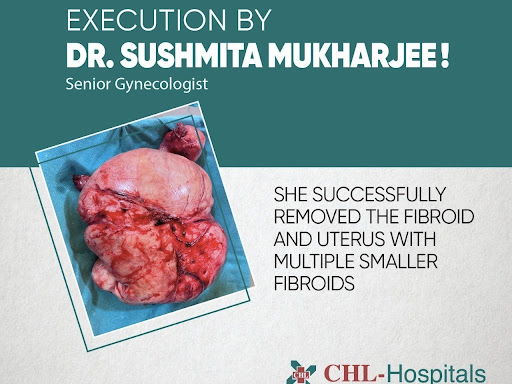
A 45-year-old- female patient came to us with complaints of abdominal pain and distention. She ha…

A 45-year-old- female patient came to us with complaints of abdominal pain and distention. She had a huge 5.8 kg uterine fibroid occupying her entire abdomen. The procedure was rather challenging due to the prior two cesarean sections and densely adherent bladder but was handled carefully by Dr. Sushmita and the team. The patient is now in a stable condition and is recovering day by day. We are proud to brag about the successes of talented doctors and of all the supporting team!

A 45-year-old- female patient came to us with complaints of abdominal pain and distention. She ha… post imageRead full post

Menarche is the onset of menstruation in girls. It usually occurs between ages 10 and 14. Menarch…

Menarche is the onset of menstruation in girls. It usually occurs between ages 10 and 14. Menarche is the first menstrual period and is typically accompanied by breast development in girls. If your daughter has started her period before age 10, she should talk to her doctor about possible reasons for her early menses. The doctor can help her determine whether this is normal or not. Consult Dr. Sushmita Mukherjee for more info.
Menarche is the onset of menstruation in girls. It usually occurs between ages 10 and 14. Menarch… post imageRead full post

Postcoital bleeding is bleeding that occurs from sexual intercourse. It is a common occurrence, a…

Postcoital bleeding is bleeding that occurs from sexual intercourse. It is a common occurrence, and it can be caused by a number of things. If a woman continues to have spotting after a couple of weeks, this is called "intermenstrual bleeding." If this happens, there are a few things that can cause it. These include: uterine fibroids, endometriosis, ovarian cysts, uterine prolapse, and cervical stenosis. In some cases, these conditions can be treated with medication. In other cases, surgery may be required. Consult Dr. Sushmita Mukherjee for more info.
Postcoital bleeding is bleeding that occurs from sexual intercourse. It is a common occurrence, a… post imageRead full post